Introduction
In today's landscape, where technological innovation is advancing rapidly, smart restaurants emerge as an inevitable trend. In this article, we will explore how technology is redefining the dining experience and improving restaurant management, making them more efficient and capable of meeting the demands of modern customers.
What Are Smart Restaurants?
Smart restaurants are those that use advanced technologies to optimize their operations and offer a better customer experience. This includes everything from the use of digital menus to integrated order management and POS (point of sale) systems. Let’s understand some of these technologies.
Digital Menus
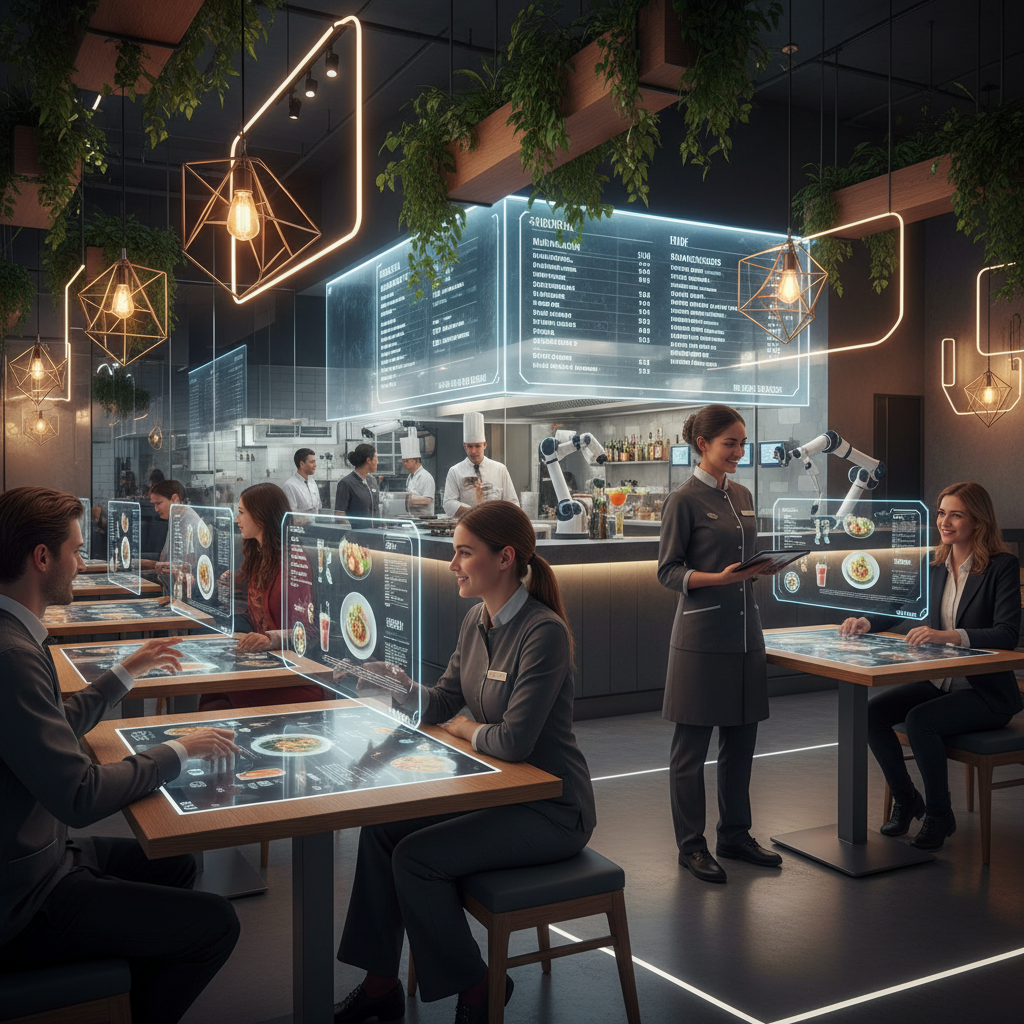
Digital menus are one of the most notable innovations. They allow customers to view options interactively and, in many cases, place orders directly from their mobile devices. This not only improves the customer experience but also reduces wait times and minimizes order errors.
Order Management Systems
Order management technology facilitates restaurant operations. With an integrated system, orders placed online and at the table can be managed centrally. This optimizes processes and increases efficiency in the kitchen and customer service.
The Importance of Modern POS
The modern POS is more than just a sales terminal. It can be used to collect customer data, monitor sales in real-time, and even generate detailed reports on restaurant performance. Investing in an advanced POS system means accessing information that can drive decision-making and marketing strategies.
Enhancing Customer Experience
Providing an exceptional customer experience is crucial for the sustainability of any food business. Thanks to technology, customers can now:
- Place faster and more personalized orders.
- Receive recommendations for dishes based on their preferences.
- Track their order status in real-time.
These elements contribute to customer loyalty and increase satisfaction.
Using Data for Decision Making
Data collection is one of the most critical parts of managing modern restaurants. With the right tools, owners can analyze:
- Customer preferences
- Performance of specific dishes
- Sales patterns by time and day of the week
This information is valuable for making adjustments to the menu, promotions, and marketing campaigns.
Automation and Operational Efficiency
Automation of processes reduces workload and consequently decreases team stress. Technology can assist with tasks such as:
- Automated inventory control
- Staff scheduling and management
- Implementation of automatic feedback systems
Thus, employees can focus more on providing excellent customer service.
Future Trends in Smart Restaurants
The future of smart restaurants is filled with innovations. Technologies such as artificial intelligence and machine learning are expected to become increasingly prevalent, making personalization and efficiency even more robust. The use of IOT (Internet of Things) to optimize connectivity between devices will soon become a reality.
Conclusion
As technology advances, restaurants that adapt their operations to become smarter will be better positioned to thrive. Implementing solutions like GuideLocal can be the first step on this journey. Transform your restaurant into a smarter, more efficient, and customer-centered business!